


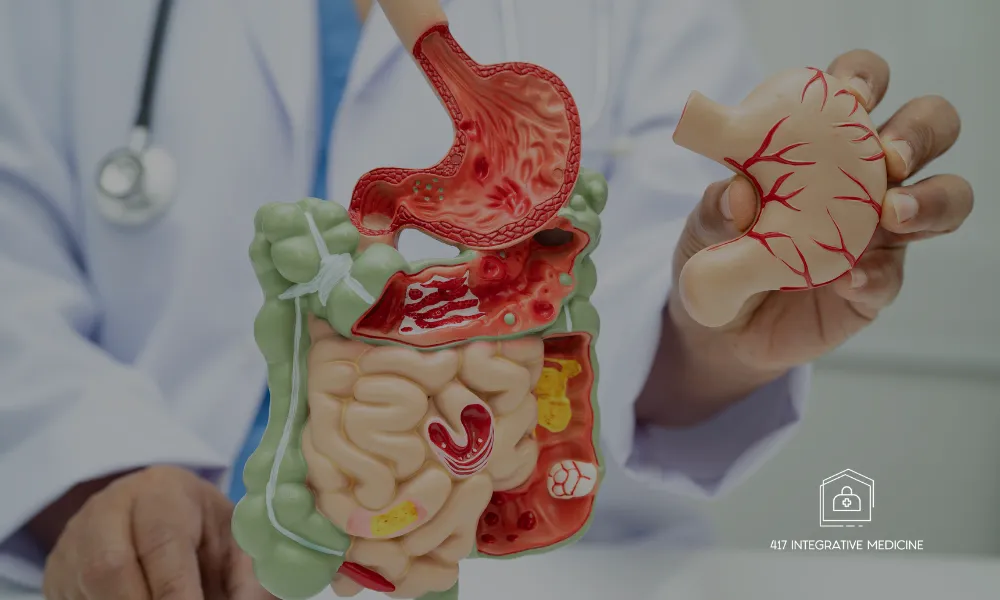
Leaky gut syndrome is one of the most talked-about health conditions we hear about from patients, and honestly, one of the most misunderstood. In adult functional medicine, it often comes up when people say things like “my stomach is always a mess,” “I feel bloated no matter what I eat,” or “I’ve been exhausted for years and nobody can tell me why.”
A lot of the time, what’s actually going on starts in the gut. And a big piece of that puzzle? A compromised gut lining, what many people call leaky gut.
So what is leaky gut syndrome, exactly? Let’s break it down below
Your small intestine is lined with tiny cells that act like bouncers at the door. They let the good stuff through nutrients, vitamins, minerals and keep the bad stuff out, like toxins, undigested food particles, and harmful bacteria.
When that lining is healthy, those cells are packed tight. The connections between them are called tight junctions. Think of them like the grouting between bathroom tiles. When the grout holds, nothing leaks through. When it breaks down, water (and other things) get in where they shouldn't.
Leaky gut syndrome also called intestinal permeability happens when those tight junctions loosen up or get damaged. Suddenly, particles that have no business leaving your gut start slipping through into your bloodstream. Your immune system sees them, freaks out, and starts firing off an inflammatory response. That inflammation, over time, shows up all over your body, not just in your stomach.
The honest answer is: a lot of things. Modern life, frankly, isn't great for your gut lining. Some of the biggest culprits include:
A diet high in processed foods, refined sugar, and additives like emulsifiers has been linked to gut lining damage. Gluten, in people who are sensitive to it, can trigger a protein called zonulin that directly loosens those tight junctions. Alcohol is another big one. It irritates the gut wall and messes with the balance of bacteria living in your intestines.
Your gut and your brain are in constant conversation. There's a direct line between them called the gut-brain axis. When you're under chronic stress and most people in Springfield are dealing with real stress, between work, family, finances, and health your body pumps out cortisol. High cortisol, over time, weakens gut barrier function. It's a cycle. Stress damages the gut. A damaged gut affects your mood. Your mood makes stress worse.
NSAIDs like ibuprofen and aspirin are things people take every day without thinking about it can irritate the gut lining with prolonged use. Same with antibiotics. Antibiotics save lives, no question. But they also wipe out the beneficial bacteria that help protect your gut wall. If you've had multiple rounds of antibiotics over the years and your gut has never felt right since, that's worth paying attention to.
Your gut is home to trillions of bacteria, fungi, and other microorganisms. When that community's gut microbiome is out of balance (too many harmful bacteria, not enough beneficial ones), it can directly damage the intestinal lining. This imbalance is called dysbiosis, and it's incredibly common.
Infections, autoimmune conditions, thyroid dysfunction, and even environmental toxins have all been associated with increased intestinal permeability. It's rarely just one thing.
This is where it gets interesting and why leaky gut is often missed. The symptoms don't always look like a "gut problem."
Common symptoms people report:
Here's something a lot of people don't know: roughly 70% of your immune system lives in your gut. So when your gut lining is compromised, it doesn't just affect digestion. It affects everything. Your skin, your joints, your brain they all feel it.
This is one of the trickier parts. Conventional medicine doesn't always have a clean diagnostic test that comes back and says "yes, you have a leaky gut." Some providers will test for elevated zonulin levels (that protein that loosens tight junctions), or do intestinal permeability testing using substances like lactulose and mannitol to see how much is passing through the gut wall. Stool testing can also reveal dysbiosis, inflammation markers, and signs of poor gut barrier function.
In integrative medicine, we look at the whole picture: your symptoms, your history, your diet, your stress levels, and relevant lab work rather than waiting for one single test to confirm what your body is already telling you. A good provider will connect the dots between what seems like unrelated symptoms and help you understand the pattern.
Yes and this is the part patients are usually most relieved to hear. The gut lining has a remarkable ability to repair itself when given the right conditions. It won't happen overnight, and there's no magic pill. But with the right approach, real improvement is absolutely possible.
The first step is identifying and removing whatever is damaging the gut lining. That usually means dietary changes cutting out processed foods, refined sugar, and potential food sensitivities (gluten and dairy are common ones). It also means addressing medications that may be contributing, and looking at environmental exposures.
Certain nutrients have strong evidence behind them for supporting gut barrier repair. L-glutamine is an amino acid that's a primary fuel source for the cells lining your gut; it's often used therapeutically in gut healing protocols. Zinc is another one. Collagen peptides (found in bone broth and supplements) provide the building blocks your gut lining needs. Nutrients like vitamin D and omega-3 fatty acids help regulate the immune and inflammatory response tied to leaky gut.
Getting the right bacteria back in balance is a big piece of the puzzle. High-quality probiotics particularly strains like Lactobacillus rhamnosus and Bifidobacterium longum have been shown to support tight junction integrity. Prebiotics (the fiber that feeds beneficial bacteria) are equally important. Fermented foods like sauerkraut, kimchi, and kefir can help, as long as your gut is ready for them.
An anti-inflammatory diet rich in vegetables, healthy fats, quality protein, and polyphenol-rich foods like berries and olive oil helps calm the immune response that's been triggered by leaky gut. Stress management isn't optional here, either. Practices like breathwork, adequate sleep, and mindfulness aren't just "nice to have" they're part of the treatment.
Digestive enzymes and stomach acid support (if low stomach acid is part of the picture) help ensure food is properly broken down before it reaches the gut lining. Poor digestion is both a cause and a consequence of leaky gut so supporting it is often necessary to break the cycle.
Most people start noticing real changes within 4–8 weeks of a targeted gut healing protocol, less bloating, more energy, clearer skin, better mood. Full gut lining repair takes longer, often 3–6 months of consistent effort. The key word is consistent. It's not about being perfect. It's about creating conditions, day after day, that let your gut heal.
We hear this question a lot. And it's fair because "leaky gut syndrome" is still a term that some conventional providers don't fully embrace. What's not debatable is that intestinal permeability is real and measurable, and that a compromised gut barrier is associated with a wide range of diseases including inflammatory bowel disease, celiac disease, type 1 diabetes, autoimmune conditions, and more. The research on this has grown substantially over the past decade. The gut lining matters. That's not fringe science.
What remains more open is exactly how much increased intestinal permeability contributes to conditions beyond the gut itself in people without a formal diagnosis. Science is still developing. But that uncertainty doesn't mean your symptoms aren't real, or that supporting your gut health isn't worth doing.
At 417 Integrative Medicine in Springfield, Missouri, we help patients figure out what's actually going on, not just manage symptoms. If you're dealing with chronic bloating, fatigue, brain fog, skin issues, or just a gut that never feels right, we'd love to help you dig into it.
We're local, we listen, and we're here to help people in the Springfield area feel genuinely better. Call us at 417-363-3900 or visit our website to schedule a consultation. You don't have to keep guessing.


