


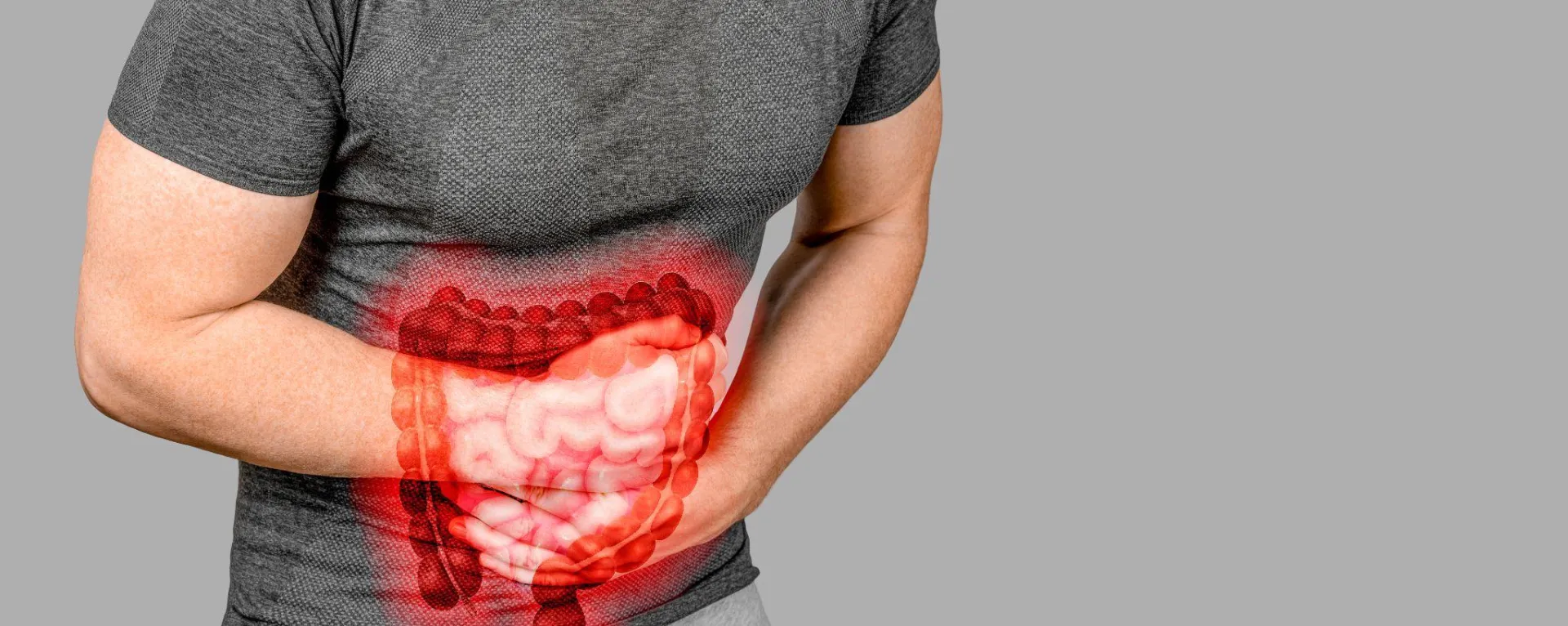
A lot of people living with inflammatory bowel disease have already done the rounds. They've had colonoscopies. They've been told they have Crohn's disease or ulcerative colitis. They've tried medications that help sometimes, but not always. And through an integrative primary care approach, they're still asking the same question: why is my body doing this?
That's exactly the question functional medicine testing for Crohn's disease and ulcerative colitis is built to answer. The testing most people get in a conventional setting is really just the beginning of the story. Functional medicine goes a lot deeper.
Crohn's disease and ulcerative colitis are both forms of inflammatory bowel disease, but they behave differently in the body. Crohn's can affect any part of the digestive tract from the mouth all the way down, and the inflammation tends to go deep into the gut wall. Ulcerative colitis stays in the colon and rectum and causes inflammation along the inner lining.
Both conditions share a common thread: the immune system is attacking the gut. That's where functional medicine testing makes a real difference. Instead of just confirming the diagnosis, the goal is to find what's driving the immune response in the first place.
People with IBD often describe their experience like this:
• "I've been flaring for months and nobody can tell me why."
• "My diet hasn't changed but everything is getting worse."
• "I feel like my gut is always inflamed, even when my scope looks okay."
Conventional IBD management usually involves bloodwork like CRP and ESR for inflammation markers colonoscopy, and imaging. These are important tools. But they don't answer some of the most clinically relevant questions:
• What's living in the gut microbiome, and how is it contributing to inflammation?
• Are there food antigens or sensitivities making the immune response worse?
• Is the gut lining compromised, what's often called "leaky gut" or intestinal permeability?
• What nutrients are the body struggling to absorb because of chronic inflammation?
• Are environmental toxins or infections playing a role?
Functional medicine testing for Crohn's disease and ulcerative colitis gets at these deeper questions. It changes how care is approached and it changes outcomes.
Here's what a full functional medicine workup for IBD might look like. Not every patient needs every test. A good provider will tailor the testing based on what's going on with each individual.
This is usually the starting point. A comprehensive stool test looks at the actual bacterial landscape of the gut: what's there, what's missing, what's overgrown. For someone with Crohn's or UC, it commonly reveals dysbiosis (imbalanced gut bacteria), reduced beneficial species like Lactobacillus and Bifidobacterium, and elevated markers of gut inflammation like calprotectin and lactoferrin.
The test also screens for pathogens, bacteria, parasites, and fungi that can trigger or worsen IBD flares. Things like Blastocystis hominis or Candida overgrowth don't always show up on standard tests but can be hugely relevant to why symptoms keep coming back.
Leaky gut is a real, measurable condition, not just a buzzword. In IBD, the gut lining is already under attack from chronic inflammation. Testing for intestinal permeability helps clarify how compromised that barrier really is. Markers like zonulin and occludin antibodies can reveal whether the tight junctions between gut cells are breaking down.
When the gut lining is leaky, proteins and bacteria pass into the bloodstream, and the immune system goes into overdrive. For autoimmune digestive conditions like Crohn's and UC, this is a critical piece of the puzzle.
A lot of IBD patients already know that certain foods make them feel worse. But identifying exactly which foods are triggering immune reactions is hard without proper testing. IgG and IgA food sensitivity panels test for delayed immune responses, the kind that don't cause an immediate reaction but quietly drive inflammation over time.
Common culprits in patients with Crohn's disease and ulcerative colitis include gluten, dairy, eggs, and certain lectins. Removing specific triggers rather than following a generic elimination diet tends to produce much better results.
Chronic gut inflammation seriously affects nutrient absorption. People with IBD are frequently deficient in vitamin D, vitamin B12, iron, zinc, magnesium, and folate, even when eating a healthy diet. These deficiencies aren't just uncomfortable. They affect immune function, energy, mood, and the body's ability to heal.
A comprehensive micronutrient panel shows exactly where the gaps are and guides a targeted plan, whether that's supplementation, dietary changes, or, in some cases, IV nutrient therapy when absorption is severely compromised.
An organic acids test gives a window into how the body is actually metabolizing nutrients and producing energy. For IBD patients, it often reveals signs of mitochondrial dysfunction, yeast overgrowth byproducts, and neurotransmitter imbalances. It's particularly useful when someone is dealing with fatigue, brain fog, or mood issues on top of their gut symptoms, which is very common.
Beyond standard CRP and ESR, a functional medicine workup looks at a broader set of inflammatory and autoimmune markers. This might include cytokine panels, secretory IgA (the gut's front-line antibody), anti-saccharomyces cerevisiae antibodies (ASCA) specific to Crohn's, and perinuclear anti-neutrophil cytoplasmic antibodies (pANCA) more common in UC. These markers help map the immunological pattern and track how the gut responds to treatment over time.
This is where functional medicine really differs from conventional care. The results aren't just handed over, they're used to build a plan. That plan might include:
• A personalized gut healing protocol with targeted probiotics, prebiotics, and gut-lining support nutrients like L-glutamine and zinc carnosine
• Removal of specific food triggers identified on testing
• Antimicrobial or antifungal support if pathogens or overgrowth are present
• IV nutrient therapy if absorption is severely compromised
• Stress and nervous system support, since the gut-brain axis plays a significant role in IBD flares
• Coordination with a gastroenterologist if medication changes are needed
Functional medicine works alongside conventional gastroenterology not against it. The goal is to give the body more tools to heal and to reduce the frequency and severity of flares over time.
You may also find this helpful: Can Functional Medicine Help With Menopause Exploring The Connection Between Functional Medicine And Womens Health.
If you have Crohn's disease or ulcerative colitis and you're ready to go beyond the standard workup, 417 Integrative Medicine in Springfield, Missouri, offers a full functional medicine approach to IBD. We work with patients who have already been diagnosed and want answers, and with people who are tired of managing symptoms without ever addressing the root cause.
We take time to actually listen, not just to the gut symptoms, but to the fatigue, the joint pain, the anxiety, the skin issues that can all be part of the IBD picture. Reach out to 417 Integrative Medicine and let's figure out what your gut is actually trying to tell you.


