


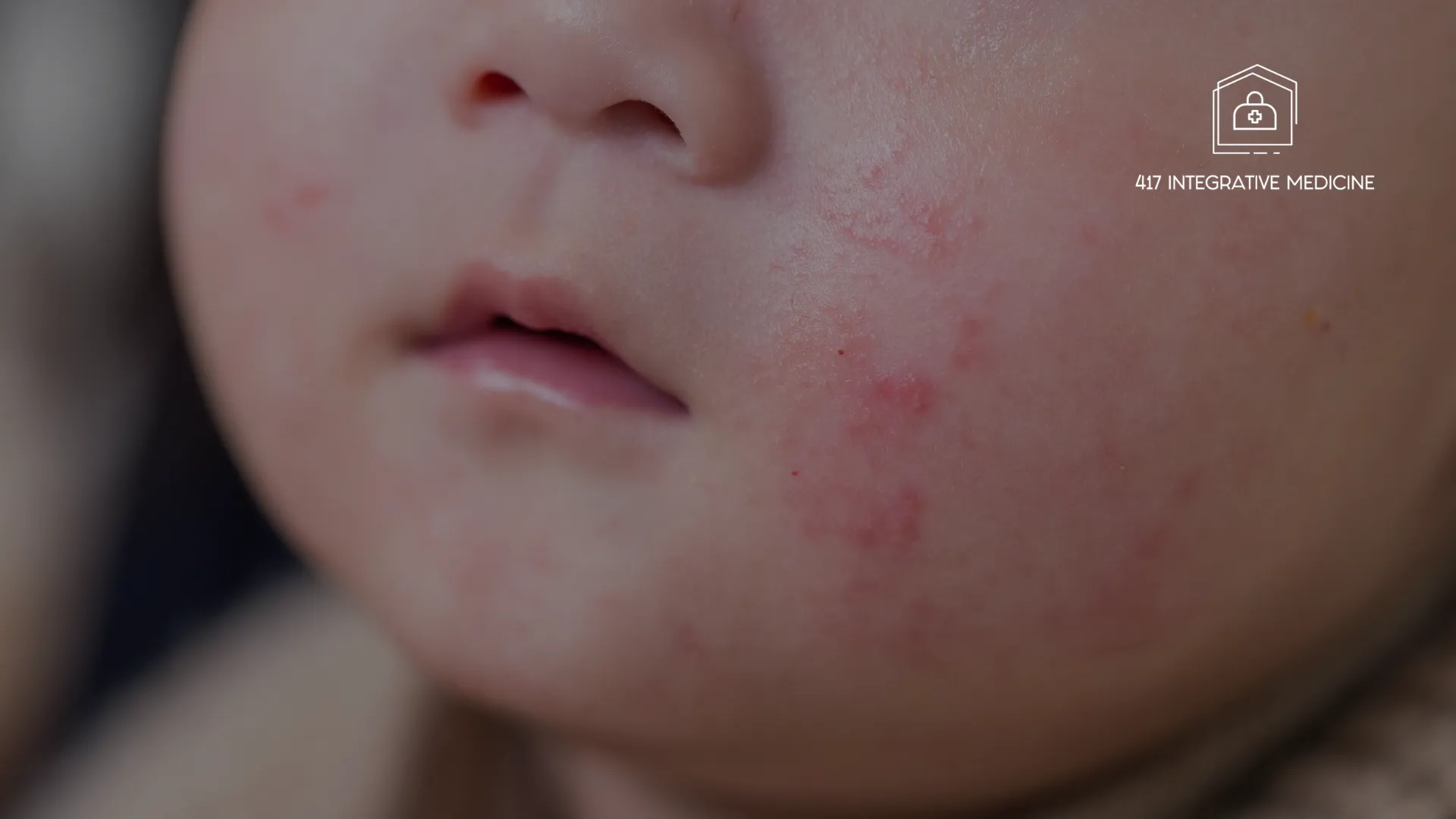
Cream after cream, and the eczema keeps coming back. That's the pattern so many parents describe. Eczema in children often returns because creams only calm the surface. They don't touch what's driving the flare underneath. Pediatric functional medicine looks at that deeper piece instead of just chasing the next flare.
Topical steroids and moisturizers have a real job to do. They reduce inflammation and lock in moisture during a flare. But for a lot of kids, the eczema keeps returning within weeks of finishing treatment. Parents end up refilling the same prescription over and over.
That pattern is a clue. It usually means something deeper is still triggering the skin, even after the visible rash clears up. Treating the surface alone rarely breaks that cycle, no matter how strong the cream gets.
A child's skin and gut are more connected then most parents realize. The gut lining acts like a filter. When that filter gets too permeable, undigested particles can slip through and trigger immune reactions. This is sometimes called a leaky gut, and it's more common in kids than most parents expect, especially those with a history of antibiotics or early formula feeding.
Those immune reactions can show up far from the gut itself. For a lot of kids, the skin is where that reaction lands first. That's part of why skin only treatment can feel like it's always one step behind.
Skin is one of the body's biggest immune organs. It's constantly reacting to signals from elsewhere in the body, including the gut. When inflammation builds up internally, the skin is often where it becomes visible. That's not a coincidence. It's how the immune system tends to work in young kids especially, whose gut lining is still developing.
Eczema is the strongest known risk factor for developing a food allergy later on. An impaired skin barrier lets allergens in more easily, which raises the odds of sensitization over time. That connection runs both directions for some kids. A food allergy that's already there can also trigger flares once it develops. Understanding which direction applies to a specific child changes the whole treatment plan.
For infants and toddlers specifically, a few foods show up again and again as triggers:
Not every child with eczema has a food trigger. But for the ones who do, removing the trigger often calms the skin more than any cream alone. Figuring out which category a child falls into is the real starting point, and guessing usually wastes months of trial and error.
IgG food sensitivity testing looks at delayed immune reactions, not the fast reactions caught by standard allergy tests. That distinction matters, because delayed reactions can show up hours or even a day after a food is eaten. This kind of testing is one part of pediatric functional medicine care, and it's often the missing piece for kids who haven't responded to standard treatment.
This makes food triggers easy to miss without testing. A parent might never connect a flare on Tuesday to breakfast on Monday. That gap is exactly why so many families feel stuck, cycling through creams without ever finding a real answer.
Testing alone isn't the whole answer. It's one piece of a larger picture, and the pieces work best together rather than one at a time. That larger picture usually includes:
Looking at all of these together tends to produce better, longer lasting results than treating the skin alone. Most families see this as a relief once they understand it, since it means the flares aren't random after all, even when they felt that way for years.
A flare that keeps coming back despite treatment is worth a closer look, not just a stronger cream. Gut health shapes immune response. Food triggers shape skin reactions. Testing connects the two so treatment can target the actual cause. A calmer gut supports calmer skin. Fewer triggers mean fewer flares.
Our pediatric functional medicine team at 417 Integrative Medicine looks past the skin to find what's actually driving a child's eczema, so families in the Springfield area can stop starting over with every flare. A pattern that repeats is worth understanding, not just managing.


